
What is referral marketing in digital marketing, and why are so many brands relying on it instead of traditional advertising?
In a world where ads are ignored, blocked, or skipped, people trust recommendations far more than promotions. That’s exactly where referral marketing comes in. Instead of businesses chasing customers, referral marketing encourages existing users to bring in new users through trust-based sharing.
In this guide, you’ll learn what referral marketing really means in digital marketing, how it works behind the scenes, real-world examples, benefits, common mistakes, and how modern tools are making referral systems easier than ever to launch.
What Is Referral Marketing in Digital Marketing?
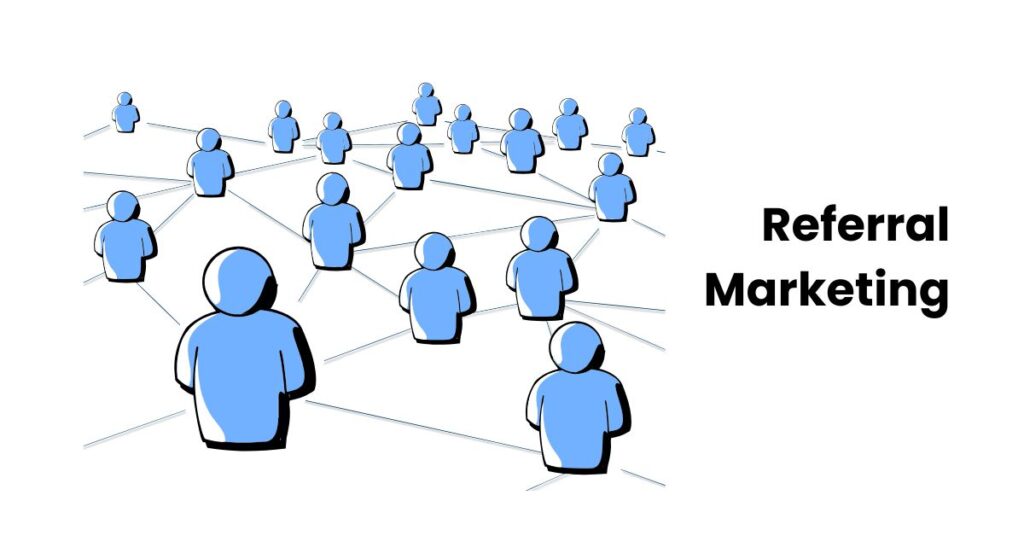
Referral marketing is a digital marketing strategy where existing customers promote a product or service to others in exchange for a reward, incentive, or benefit. Instead of brands pushing ads to cold audiences, referral marketing relies on trust-based recommendations from people who have already experienced the product.
In digital marketing, referral marketing usually works through unique referral links, invite codes, or sharing systems that track who referred whom. When a new user signs up or completes an action, the referrer is rewarded. This creates a natural cycle of sharing driven by motivation rather than persuasion.
What makes referral marketing powerful is that it mirrors real-life word-of-mouth behavior—but at scale. People are far more likely to trust a recommendation from a friend, colleague, or peer than a paid advertisement. In today’s crowded digital space, referral marketing stands out because it feels personal, authentic, and credible.
Why Referral Marketing Matters Today
Referral marketing has become increasingly important because traditional digital marketing is losing effectiveness. Ads are more expensive, competition is higher, and users are constantly bombarded with promotional messages. As a result, trust in ads has declined sharply.
Referral marketing solves this problem by shifting promotion from brands to people. When someone recommends a product, it doesn’t feel like marketing—it feels like advice. This trust factor dramatically improves engagement and conversion rates.
Another reason referral marketing matters is sustainability. Paid ads stop producing results the moment you stop spending. Referral programs, on the other hand, can continue generating leads long after they are launched. Each new customer becomes a potential promoter, creating compounding growth.
In a digital environment where attention is limited and skepticism is high, referral marketing offers a more human, cost-effective, and scalable way to grow.
Real Referral Marketing Examples
Referral marketing didn’t become popular by accident. Some of the most influential digital companies used it as a core growth lever, and two of the clearest real-world examples are Dropbox and Uber. Their success came from thoughtful product design, but their referral programs played a major role in accelerating user adoption.
How Dropbox Used Referral Marketing to Scale
Dropbox did not rely on its referral program alone to grow. The company focused heavily on improving its product, listening to user feedback, and refining the overall experience. However, the referral strategy they implemented became a turning point in how digital growth was approached.
Because Dropbox offered cloud storage, the company aligned its referral reward directly with its product. Users who invited friends were rewarded with additional storage space, and people who accepted an invitation also received bonus storage. This created a balanced, two-sided referral system where both participants benefited equally from taking the desired action—signing up and activating an account.
The process was intentionally transparent. Users could clearly see how much extra storage they earned from each successful referral and how close they were to reaching the maximum limit. Since storage was something users already wanted, sharing invitations felt helpful rather than promotional. This alignment between reward and product made the referral system extremely easy to understand and naturally encouraged repeat sharing. Over time, this approach played a significant role in Dropbox achieving rapid user growth within a relatively short period.
How Uber Designed Its Referral Program for Fast Adoption
Uber’s referral strategy focused on speed, simplicity, and immediate value. When Uber was expanding into new cities, it needed a way to attract both new riders and encourage existing users to spread the word. The company introduced a referral system that offered ride credits to both the person sharing the invite and the new user signing up.
When someone joined Uber, they were given a personal invite code that could be shared with friends. If a new user signed up using that code and completed their first ride, both users received ride credits. These credits were designed to be valuable enough to cover a significant portion—or sometimes the full cost—of a ride, which made the incentive highly appealing.
What made Uber’s referral program effective was how little effort it required. Users only needed to share their code, and the reward was clearly explained inside the app. Over time, Uber adjusted the value of the credits, but the structure remained the same: simple sharing, two-sided rewards, and immediate benefits tied directly to the core service. This consistency helped Uber encourage repeat referrals as it expanded into new markets.
What These Examples Reveal About Referral Marketing
Both Dropbox and Uber succeeded with referral marketing because they made the system easy to understand, fair for both parties, and directly connected to what users valued most about the product. Instead of pushing promotions, they designed referral programs that felt natural, useful, and rewarding. These principles continue to influence how modern referral marketing systems are built today.
Referral Marketing vs Traditional Digital Marketing
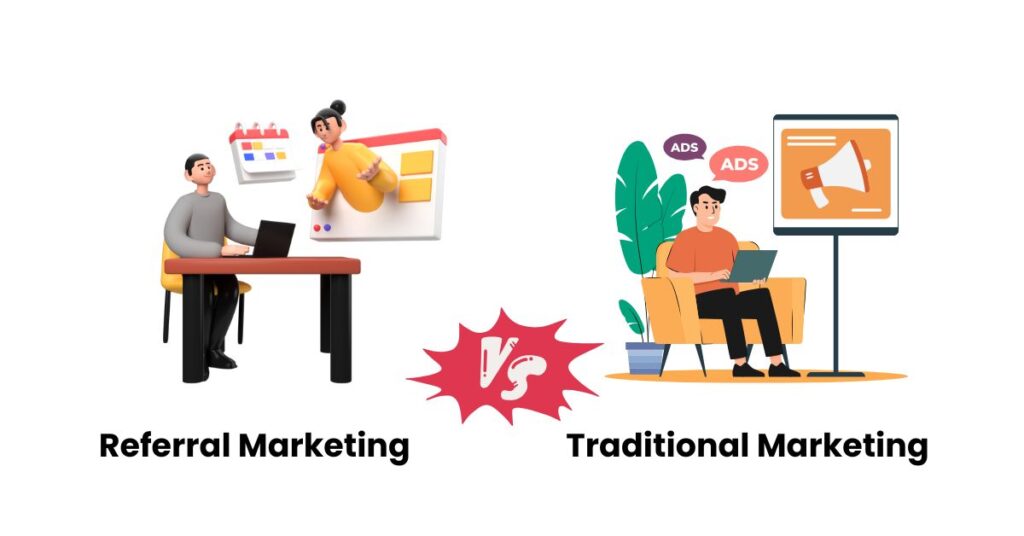
Traditional digital marketing relies on interruption. Ads appear while users scroll, watch videos, or read content. Referral marketing works differently—it integrates growth into the user experience.
In traditional marketing, businesses target strangers and try to convince them to care. In referral marketing, customers do the convincing. This difference alone leads to higher trust and better conversions.
Cost is another major contrast. Paid digital marketing requires continuous investment. Referral marketing focuses on incentives, which are often far cheaper than ads and only paid when results occur.
Scalability also differs. Ads scale linearly with budget. Referral marketing scales exponentially because each new user can bring more users. That’s why many modern brands prioritize referral strategies alongside or even instead of ads.
Key Benefits of Referral Marketing
Reach the Right Audience Automatically
Referral marketing naturally attracts people who are similar to your existing customers. Since people tend to refer friends with shared interests, your brand reaches a more precise and relevant audience without advanced targeting.
Build Trust Faster
Referred customers already trust your brand before signing up because the recommendation came from someone they trust. This reduces skepticism and shortens the decision-making process.
Measure Customer Satisfaction Easily
When customers actively refer others, it’s a strong signal of satisfaction. Referral activity becomes a built-in feedback system that shows how happy users are with your offering.
Expand Your Market Organically
Referral sharing allows your brand to reach new networks you couldn’t access through ads alone. Each customer opens the door to a new audience segment.
Increase Brand Awareness Naturally
Even when referrals don’t convert immediately, your brand still gains visibility through repeated exposure across personal networks and platforms.
Identify Your Most Loyal Users
Referral data helps you spot your strongest advocates. These users can later be nurtured into ambassadors, affiliates, or community leaders.
Improve Conversion Rates
Referral leads convert better because trust is already established. This leads to higher signup rates and better engagement.
Boost Customer Engagement
Referral programs encourage users to interact more with your brand as they track rewards, points, or leaderboard positions.
Improve Retention Long-Term
Customers who refer others are more emotionally invested and tend to stay longer, increasing lifetime value.
How Referral Marketing Works
Referral marketing follows a simple but powerful loop. First, a user joins and experiences value. Then, they’re encouraged to share through an incentive. When someone joins through their referral, both parties benefit.
This process repeats continuously:
Join → Experience Value → Share → Earn Reward → Repeat
Tracking systems ensure referrals are attributed correctly, while rewards motivate ongoing participation. The key is simplicity—users should understand instantly how to refer and what they gain.
Modern referral systems automate this entire flow, making it easy to manage at scale without manual tracking or follow-ups.
10 Proven Referral Marketing Strategies
1. Deliver More Than Expected
When users are genuinely impressed, they refer naturally. Over-delivering creates emotional motivation to share.
2. Appeal to Emotions
People share experiences that make them feel smart, helpful, or generous. Frame referrals as helping others.
3. Personalize Communication
Use names, preferences, and behavior to make referral invitations feel personal, not automated.
4. Ask for Introductions
Instead of “refer someone,” ask users to “introduce a friend who might benefit.” This feels more natural.
5. Create Exclusive Experiences
Invite-only programs or early access rewards increase perceived value and urgency.
6. Customize Rewards
Let users choose rewards that matter to them. Flexibility increases participation.
7. Use Tiered Incentives
Offer bigger rewards for more referrals. This encourages continued sharing.
8. Position as a Gift
“Give a friend a bonus” performs better than “earn a reward for yourself.”
9. Reward Both Sides
Two-way incentives remove friction and make referrals feel fair.
10. Gamify with Points
Points systems, leaderboards, and milestones keep users engaged long-term.
Different Types of Referral Marketing
Referral marketing comes in multiple forms. Customer referral programs reward existing users. Partner referrals involve businesses promoting each other. Influencer-style referrals rely on trusted personalities. Loyalty-based referrals reward repeat engagement, while gamified referrals use points and rankings.
Each type suits different business models, but all rely on the same principle: trust-driven sharing.
Common Referral Marketing Mistakes to Avoid
Many referral programs fail due to weak incentives, complicated processes, or poor timing. Asking for referrals before delivering value is a common mistake.
Another issue is lack of follow-up. Without reminders or notifications, users forget to share. Finally, expecting instant results can lead to disappointment. Referral marketing compounds—it grows stronger over time.
Referral Marketing vs Affiliate Marketing
Referral marketing and affiliate marketing are often confused, but they serve different purposes. Referral marketing relies on customers. Affiliate marketing relies on marketers.
Referrals are driven by trust and personal experience. Affiliates are driven by commissions and promotion. Referral leads tend to be higher quality, while affiliate traffic focuses on volume.
Both can coexist, but referral marketing is better for long-term brand growth and retention.
How AI Is Changing Referral Marketing
AI has fundamentally changed how referral marketing is planned, executed, and scaled. In the past, building a referral system required multiple tools, manual setup, technical tracking, and constant optimization. For many businesses, the complexity alone made referral marketing difficult to implement consistently.
Today, AI removes those barriers.
Modern AI-powered referral platforms can automatically create complete referral campaigns, define reward structures, track referrals in real time, and optimize performance based on user behavior. Instead of guessing what incentives might work, AI analyzes engagement patterns and suggests rewards, actions, and milestones that encourage sharing.
AI also makes personalization possible at scale. For example, users can receive customized referral messages, unique sharing links, and targeted rewards based on how they interact with a campaign. This level of personalization was nearly impossible to manage manually, but is now handled automatically in the background.
Tools like FlexiViral are a practical example of this shift. Rather than requiring users to design referral logic from scratch, FlexiViral uses AI to generate an entire viral referral campaign using just a few inputs—such as the brand name, niche, and campaign goal. The system then builds the referral loop, assigns rewards, creates sharing options, and tracks performance in real time.
For instance, a creator launching a free guide can use AI to instantly set up a referral campaign where users unlock bonus content by inviting friends. A local business can launch a referral program that rewards customers for bringing in new visitors—without manually managing links or spreadsheets. An online service can use AI-powered leaderboards and points to keep participants engaged over time.
By automating setup, tracking, and optimization, AI has made referral marketing faster to launch, easier to manage, and more scalable than ever before. Instead of spending weeks building systems, businesses can now focus on delivering value—while AI handles the mechanics of growth in the background.
Read Full Review Here: FlexiViral Review 2026: Does This AI Viral Engine Actually Work?
Final Thoughts
Referral marketing stands out because it aligns growth with trust. Instead of relying on interruptions or constant ad spending, it allows businesses to grow through genuine recommendations from people who already believe in the product or service. As digital audiences become more selective and ad fatigue continues to rise, this approach feels more natural and sustainable.
Throughout this guide, you’ve seen how referral marketing works, why it matters today, and how real companies like Dropbox and Uber used simple referral mechanics to accelerate adoption. You’ve also explored the benefits, common mistakes, and the growing role of AI in making referral systems easier to launch and manage.
The biggest takeaway is that referral marketing is not about shortcuts—it’s about designing experiences worth sharing. When the product delivers value and the referral process is simple, customers are far more willing to spread the word.
If you’re exploring referral marketing for your own business, the key is to start small, focus on value, and refine based on how users respond. And if you’ve already tried referral strategies, I’d love to hear your perspective.
👉 What do you think about referral marketing in today’s digital landscape?
Have you ever joined a product or service through a referral? Share your thoughts in the comments—your experience could help others understand what really works.